
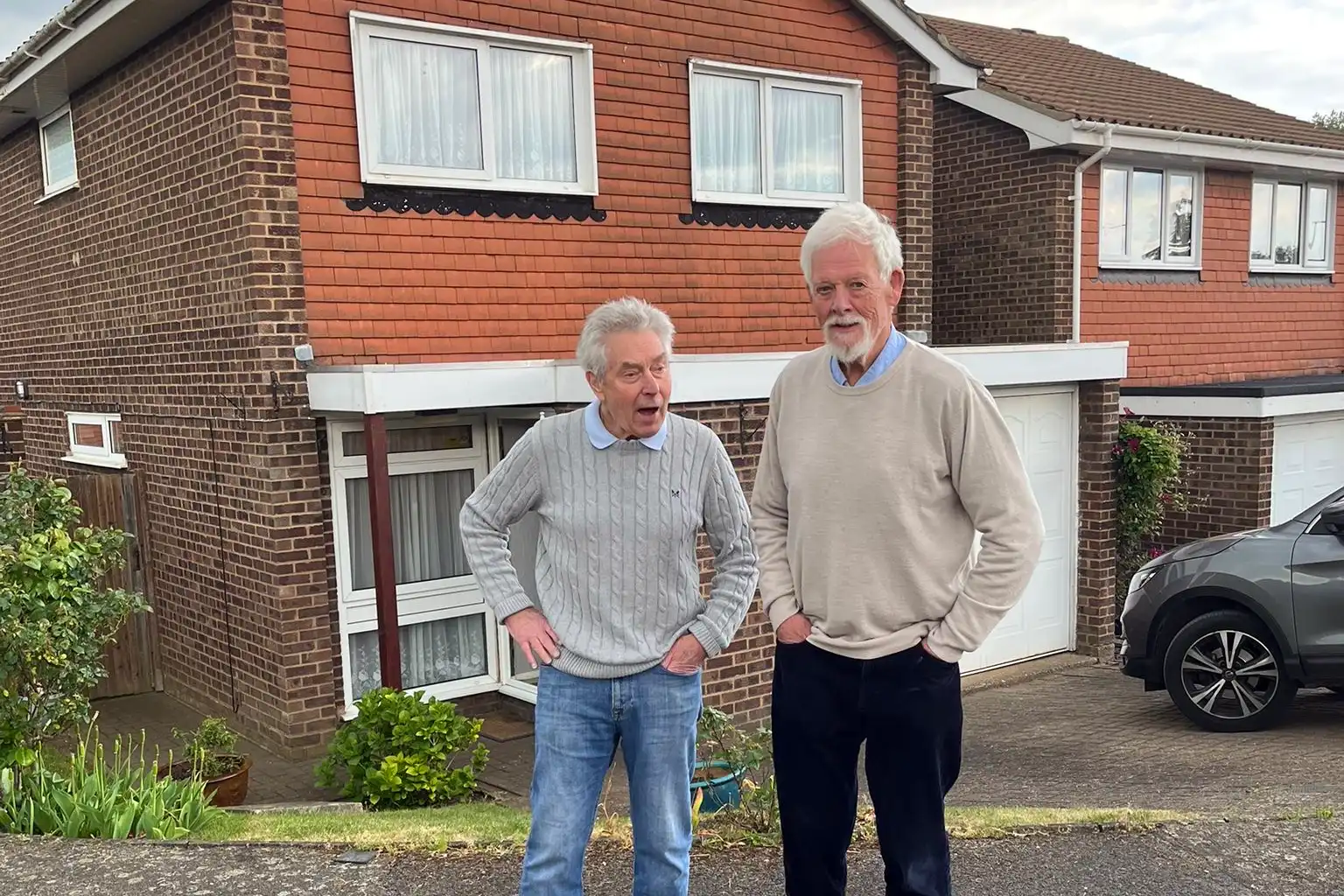
John and Ian’s Story
Having known each other for 30 years, living opposite each other in Harpenden for 20 of them, John Tett and Ian Darnell recently discovered that they’d both been diagnosed with Wild-Type ATTR cardiac amyloidosis. Just how much of a coincidence is this?
John and Ian’s Story
July 15, 2026 · by Seth Mowshowitz
John Tett and Ian Darnell have known each other for over thirty years. They lived opposite each other in the town of Harpenden, Hertfordshire for twenty of those years. John, now aged 76, was recently diagnosed with Wild-type ATTR cardiac amyloidosis. Earlier this year, John and Ian were catching up and came to a sudden, startling realisation: they’d both been diagnosed with Wild-type ATTR cardiac amyloidosis.
Ian retired from his job in the city at the age of 50 when he was diagnosed with both osteoarthritis and rheumatoid arthritis. He then became a fitness instructor and kept that going for 10 years until the arthritis made it too difficult to continue. In 2014 Ian was also diagnosed with atrial fibrillation and, most recently, amyloidosis.
Now 81 years old, Ian manages numerous amyloidosis symptoms on a daily basis on top of the arthritis and atrial fibrillation including back problems, carpal tunnel syndrome, swollen ankles, poor circulation, itching and fatigue — arguably the most frustrating symptom for him.
Ian’s amyloidosis is being treated with tafamadis and this has proven quite successful so far. He’s on the waiting list for knee replacement surgery and, sadly, has had to give up all forms of alcohol including red wine, his favourite.
Living with amyloidosis: Ian’s story
Ian retired from his job in the city at the age of 50 when he was diagnosed with both osteoarthritis and rheumatoid arthritis. He then became a fitness instructor and kept that going for 10 years until the arthritis made it too difficult to continue. In 2014 Ian was also diagnosed with atrial fibrillation and, most recently, amyloidosis.
Now 81 years old, Ian manages numerous amyloidosis symptoms on a daily basis on top of the arthritis and atrial fibrillation including back problems, carpal tunnel syndrome, swollen ankles, poor circulation, itching and fatigue — arguably the most frustrating symptom for him.
Ian’s amyloidosis is being treated with tafamadis and this has proven quite successful so far. He’s on the waiting list for knee replacement surgery and, sadly, has had to give up all forms of alcohol including red wine, his favourite.
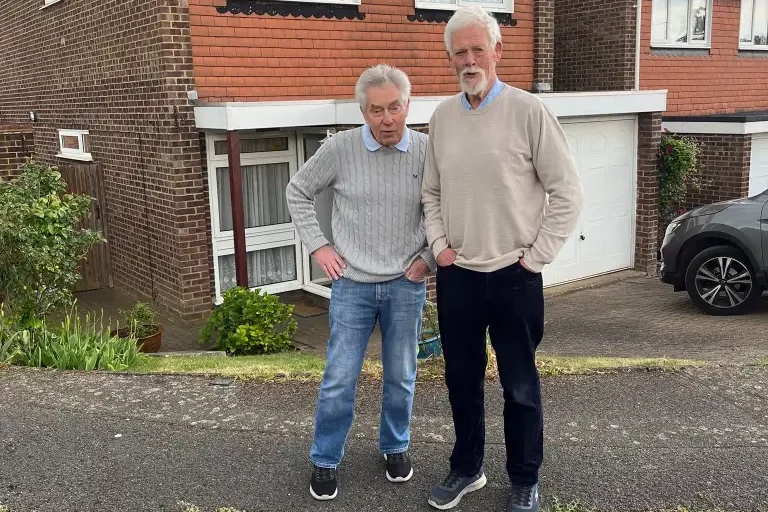
John's journey to diagnosis
John was also diagnosed with atrial fibrillation a number of years ago. Sadly, this led to him having to stop donating platelets and plasma. He’d been a donor for 48 years up until then. For around three years John had sleep apnoea before losing four stone in weight. He also focussed on exercising more and eating healthier foods.
In mid-December 2025, John was admitted to New Cross Hospital, Wolverhampton and spent three nights there as an inpatient. When he was given his drugs and paperwork, they were treating him for a minor heart attack. Just prior to leaving, a doctor suggested that he should have an MRI scan. This was done in January and he was subsequently referred to the Queen Elizabeth Hospital, Birmingham.
By early April, after many scans and blood tests, it was finally confirmed that John had amyloidosis. He promptly agreed for his name to be put forward for a clinical trial. He also decided that he was going to set himself a challenge of walking 400 kilometres in 90 days to help raise awareness and funds for Amyloidosis UK’s charitable work. Part of the reason John’s been able to meet this gruelling challenge so far is because of the wonderful efficiency of these two NHS Hospitals. He can’t understate how grateful he is to them for being diagnosed in the early stages of his condition. As of May, John is being treated with acoramidis.
By early April, after many scans and blood tests, it was finally confirmed that John had amyloidosis. He promptly agreed for his name to be put forward for a clinical trial. He also decided that he was going to set himself a challenge of walking 400 kilometres in 90 days to help raise awareness and funds for Amyloidosis UK’s charitable work. Part of the reason John’s been able to meet this gruelling challenge so far is because of the wonderful efficiency of these two NHS Hospitals. He can’t understate how grateful he is to them for being diagnosed in the early stages of his condition. As of May, John is being treated with acoramidis.
It turned out that Ian had already been living with his amyloidosis diagnosis for four years by the time John received his own. Prior to being diagnosed, neither John nor Ian knew anybody else in their social circles who had been diagnosed with the condition. Remarkably, Ian managed to find two more people in his area following his diagnosis thanks to a local newspaper and they formed a small support group. All three in the group suffer from very similar symptoms including back problems, carpal tunnel syndrome, arthritis and atrial fibrillation. The group has been a real lifeline for Ian.
The truth is, we don't know exactly how many people in the UK are living with amyloidosis, but the number is almost certainly higher than most people would expect. One reason for this is that the condition is significantly underdiagnosed. ATTR amyloidosis affecting the heart (ATTR-CM) is now thought to be far more common than was previously understood. A study using UK health records found that the number of people being newly diagnosed with ATTR-CM almost tripled between 2004 and 2021 and, even so, many cases are still being missed.
If we look at wild-type ATTR (ATTRwt) specifically, the best UK data we have comes from the National Amyloidosis Centre (NAC) at the Royal Free Hospital in London, the only NHS centre in the UK that specialises in amyloidosis. Between 2010 and 2022, around 1,600 people over the age of 70 were diagnosed with ATTRwt-CM there, and the number of new diagnoses has grown steadily over time.¹ Based on those figures, we estimate that roughly 1 in 13,000 to 1 in 22,000 people in the UK currently have a diagnosis, though the true number is almost certainly much higher since so many cases go undetected.
Understanding the numbers
The truth is, we don't know exactly how many people in the UK are living with amyloidosis, but the number is almost certainly higher than most people would expect. One reason for this is that the condition is significantly underdiagnosed. ATTR amyloidosis affecting the heart (ATTR-CM) is now thought to be far more common than was previously understood. A study using UK health records found that the number of people being newly diagnosed with ATTR-CM almost tripled between 2004 and 2021 and, even so, many cases are still being missed.
At first glance, John and Ian's story does seem like a huge coincidence. Upon closer reflection, it raises some interesting questions.
If we look at wild-type ATTR (ATTRwt) specifically, the best UK data we have comes from the National Amyloidosis Centre (NAC) at the Royal Free Hospital in London, the only NHS centre in the UK that specialises in amyloidosis. Between 2010 and 2022, around 1,600 people over the age of 70 were diagnosed with ATTRwt-CM there, and the number of new diagnoses has grown steadily over time.¹ Based on those figures, we estimate that roughly 1 in 13,000 to 1 in 22,000 people in the UK currently have a diagnosis, though the true number is almost certainly much higher since so many cases go undetected.

Studies from other countries suggest the condition is far more common than the diagnosed figures imply. A 2024 Italian study that screened the general public found ATTRwt-CM in nearly 1 in 200 people aged 65–90,² and post-mortem studies have found signs of TTR amyloid deposits in the hearts of up to 1 in 4 people over the age of 80, though not all of these would have caused symptoms or illness.³ The condition is much more likely to affect older people, and appears to be more common in men.¹ ² ³
So what are the chances of two people who know each other both having an ATTRwt-CM diagnosis? In the general population, very low: perhaps 1 in 400 to 1 in 1,000 or more. But once you factor in age, the picture changes. ATTRwt-CM is almost entirely a condition of people over 70,⁴ which means the pool of diagnosed people is much more concentrated within that age group. Two older patients who share the same cardiology clinic or support network are moving in a much smaller world. Within that world, what looks like an extraordinary coincidence starts to seem a little less surprising.
Why so many people are still waiting for answers
What John and Ian’s story tells us about amyloidosis in the UK is that the landscape is definitely shifting for the better. More people are being diagnosed than ever before and the chances of being misdiagnosed or remaining undiagnosed are steadily reducing. What seemed like a huge coincidence at first turned out to be a confirmation that things are moving in the right direction towards better outcomes for those either living with amyloidosis now or who will be living with the condition in future.
But John and Ian's story also shows us how much still needs to change. Most people in the UK — including many healthcare professionals — have never heard of amyloidosis. John and Ian have both experienced this first-hand: the majority of doctors, nurses and other healthcare staff they've encountered outside of their specialist care teams had no idea what the condition was. And while more people are being diagnosed than ever before, there is still a large gap between the number of people who actually have amyloidosis and the number who have been identified and are receiving care.
One step at a time
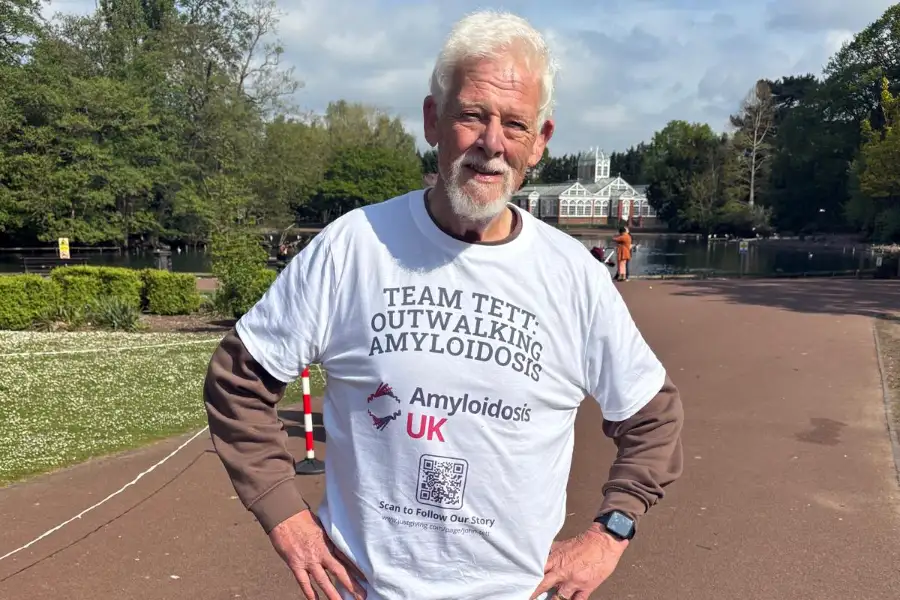
John was fortunate to be diagnosed in the very early stages of amyloidosis, thanks to two brilliant hospitals and NHS staff. Many who are diagnosed are not as fortunate. Amyloidosis is still too often either caught late or mistaken for other illnesses. Despite initially feeling very low, John wanted to make the most of being diagnosed early while he still could. He took it upon himself to make a difference and set himself the aforementioned walking challenge to help raise awareness of amyloidosis in the hope that others might get a diagnosis sooner as well. He has his whole family behind him, helping every step of the way. Each day they get more involved across three generations, organising their own events to help raise awareness.
John’s original target was walking 400 kilometres. By the end of May, he’d already reached 226 km and so decided to raise the bar to 500 km. A few weeks later he raised it again to a staggering 600 km. Finally, on July 24, John reached his ultimate milestone having walked 600 kilometres in 3 months. John initally needed to average 39 km every single week and always met or exceeded the target. For a man of 76 managing the daily toll and sleepless nights of amyloidosis, this has been a monumental task and the extreme heatwaves of 2026 made it even more so.
Support for the fundraiser from the public has been enthusiastic and incredbily positive. Early on, the family had to up their fundraising target from £2,000 to £2,500. Then having exceeded further targets, it is now up to £3,500 and has nearly been reached at the time of writing. For a grass roots team effort, this is an amazing achievement.
Support for the fundraiser from the public has been enthusiastic and incredbily positive. Early on, the family had to up their fundraising target from £2,000 to £2,500. Then having exceeded further targets, it is now up to £3,500 and has nearly been reached at the time of writing. For a grass roots team effort, this is an amazing achievement.
With gratitude and with hope
All of us at Amyloidosis UK wish to extend a huge, heartfelt thank you to John and his family. What they’re doing is an inspiration to the entire amyloidosis community. It shows us both how important it is to increase early diagnoses for as many people as possible going forward and, most of all, that there is life and hope beyond a diagnosis. We’d also like to thank Ian for taking the time to tell us his story. We wish both John and Ian all the best. We hope you’ll find inspiration in their story and share it with others. If you’d like to support John’s amyloidosis fundraiser, you’ll find the link below.
References

Team Tett: Outwalking Amyloidosis
John Tett is walking 600km in 90 days to help raise awareness of amyloidosis with help and support from three generations of his family. Donations go towards our charitable work.
Please share and support John’s JustGiving page (and keep checking it for updates).